Video walls: LED vs LCD for commercial spaces.
2026-09-21 · Obsidian Audio Video · Houston
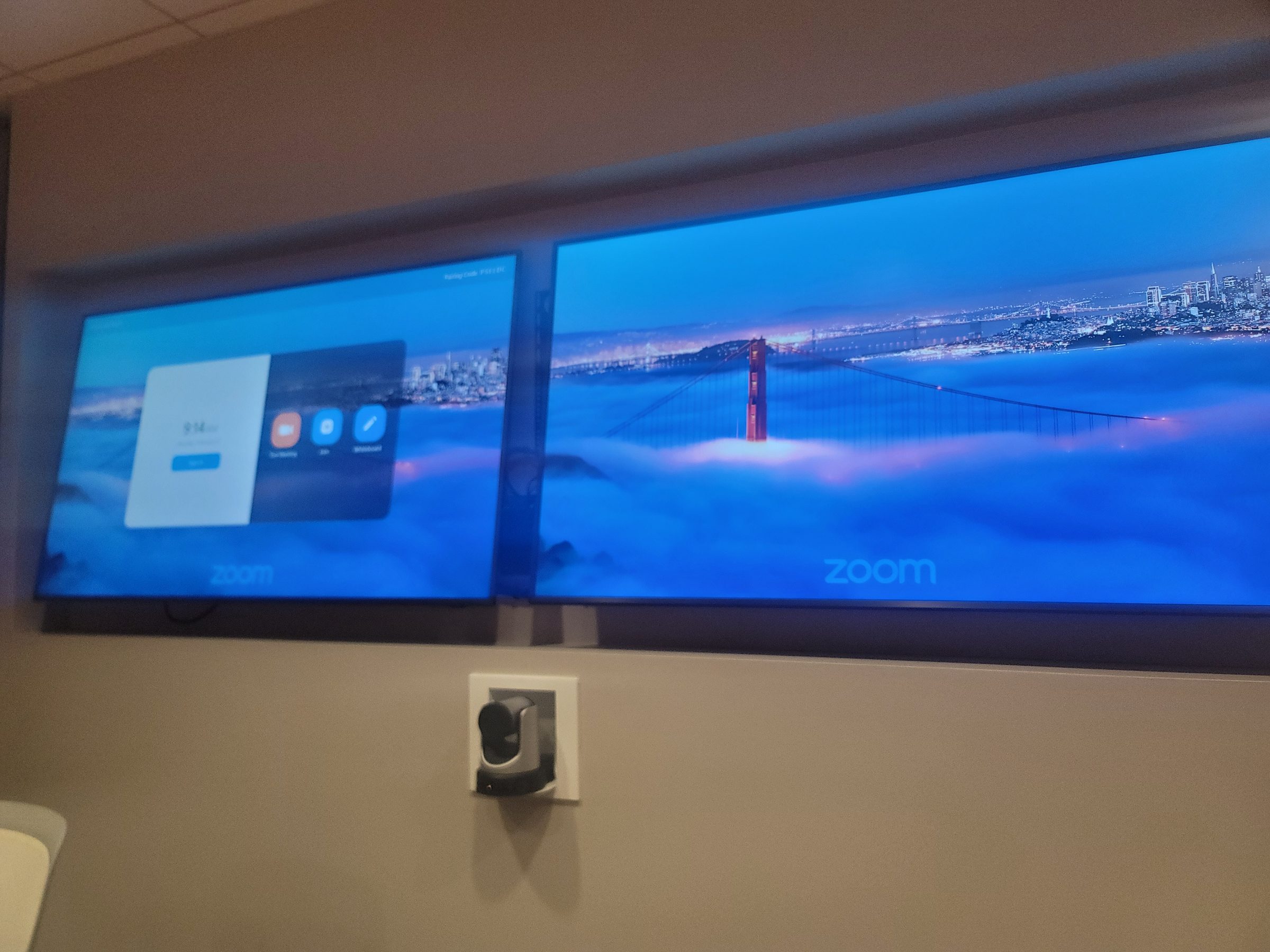
Video walls have become standard in Houston commercial spaces — corporate lobbies in the Energy Corridor, restaurants in Midtown, sports bars in Washington Avenue, retail stores in the Galleria, and control rooms across the industrial complexes from the Ship Channel to Sugar Land. The choice between LED and LCD determines cost, image quality, brightness, maintenance, and the visual impact for the next 5–10 years. It's one of the most visible AV investments a business can make, and the wrong choice is expensive to fix — you don't want to replace a video wall because the brightness is wrong for your space.
LCD video walls
LCD video walls use commercial-grade LCD panels tiled together. They've been the standard for a decade, and the technology has matured — modern panels have bezels under 1mm, making them nearly seamless from normal viewing distances.
- Cost: usually the lower-cost option for a 2×2 or 3×3 wall; the price includes mounting, calibration and a video wall controller
- Brightness: 500–700 nits (standard) or 1,500+ nits (high-brightness models from Samsung, LG, NEC)
- Bezel: Modern panels have <1mm bezels (nearly seamless at 6+ feet viewing distance)
- Resolution: 1080p per panel is common — a 2×2 wall gives 3840×2160, a 3×3 gives 5760×3240
- Best for: Corporate lobbies, control rooms, conference rooms, restaurants with controlled lighting
- Brands we install: Samsung IF Series, LG UH5F, NEC UNV, Planar
LED video walls
LED video walls use individual LED modules tiled together — no bezels, no seams, continuous image. They're significantly brighter than LCD, viewable in direct sunlight, and can be built to any size or aspect ratio. The tradeoff is cost and pixel pitch.
- Cost: usually higher than LCD, driven by pixel pitch, size and installation complexity
- Brightness: 800–2,500+ nits. Significantly brighter than LCD — viewable even in Houston's sun-drenched lobbies and outdoor installations
- Seamless: No bezels. The image is continuous, edge to edge.
- Best for: Retail, restaurants, outdoor installations, high-impact lobbies, any space where the wall is the focal point
- Brands we install:
Pixel pitch and viewing distance
Pixel pitch (measured in millimeters) is the distance between LED centers. Smaller pitch = higher resolution = closer viewing distance. The rule of thumb: minimum viewing distance in feet ≈ pixel pitch in mm × 3.3.
- P0.9: 3+ feet — ultra-fine detail, control rooms, close-up viewing
- P1.2: 4+ feet — fine detail, close viewing, high-end retail
- P1.5: 5+ feet — good for most indoor applications, corporate lobbies
- P1.8: 6+ feet — cost-effective for 8+ foot viewing, restaurants, sports bars
- P2.5: 8+ feet — standard for large walls, event spaces
- P3.9: 13+ feet — outdoor and large-format, billboards, stadium concourses
For most Houston restaurants and corporate lobbies, P1.5 or P1.8 is the sweet spot — high enough resolution for 6–10 foot viewing, at a cost that's manageable. P2.5 is fine for sports bars where viewers are 10+ feet away and the content is sports, not fine text.
Houston installation considerations
- Heat: LED walls generate significant heat. In Houston's climate, the wall's cooling system is as important as the display itself. We install active rear ventilation or air conditioning for any LED wall over 100 square feet.
- Power: LED walls need dedicated circuits — a 3×3 LED wall can draw 4,000W. Most Houston commercial buildings need an electrician to run dedicated 30A or 50A circuits.
- Structural: A video wall weighs 200–800 lbs depending on size. We verify the wall structure — particularly in older Houston buildings where the stud layout may not align with the wall location.
- Content: A video wall needs a content source. We install BrightSign media players, an AV-over-IP distribution system, or a dedicated video wall processor (like a Crestron NVX or Datapath) depending on whether the wall shows static content, live TV, or dynamic multi-zone content.
Service and maintenance
LED walls require calibration every 12–18 months — individual LED modules drift at different rates, and without recalibration, color uniformity degrades. Plan for that calibration in your service budget. LCD walls are lower maintenance — panel replacement is straightforward if one fails, and modern panels carry 3-year commercial warranties. Budget for ongoing maintenance either way.
Planning a video wall? Explore commercial AV or call 346-357-5323.