
Related Guide
Automation Platform Guide
Control4 vs. Crestron vs. Savant: Choose the Platform Around the Project.
Control4, Crestron, and Savant can all create polished smart-home experiences. The right decision comes from the required integration depth, interface, customization, project scale, existing equipment, service model, and the team responsible for programming and support.
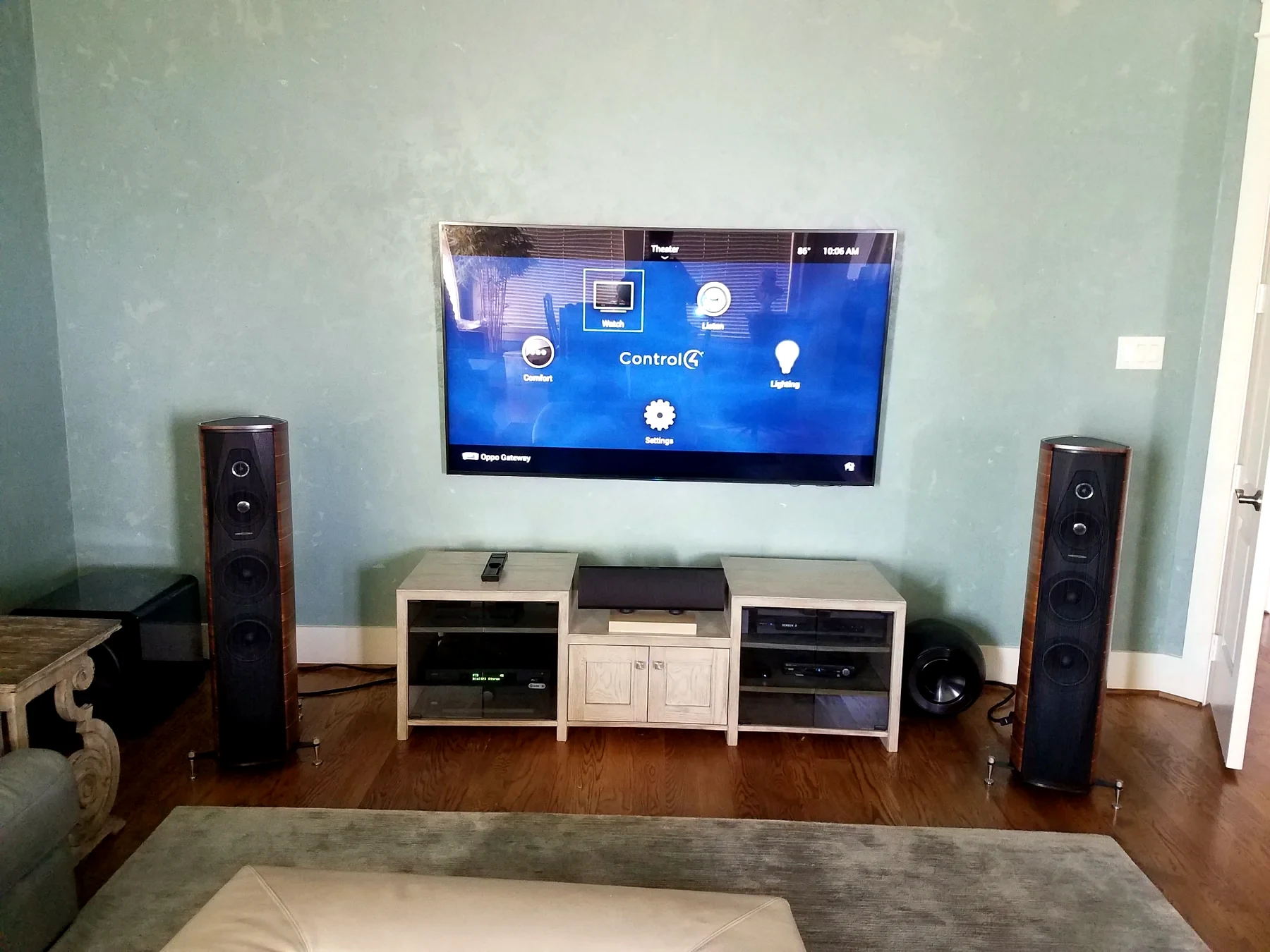
Choose by requirements, not brand familiarity
Start with the experience the home needs to deliver.
List the rooms, users, entertainment systems, lighting, shades, climate zones, gates, locks, cameras, pool features, network requirements, custom workflows, interfaces, remote-access expectations, and expansion plans. The platform should fit the project rather than forcing the project into a generic package.
Control4 can be a strong fit for repeatable whole-home experiences.
Control4 is commonly considered when a home needs integrated media, remotes, lighting, shades, climate, security interfaces, scenes, and app control with a consistent room-based experience. The final quality still depends on device selection, network design, driver compatibility, programming, interface organization, and documentation.
Crestron supports deep customization and complex system logic.
Crestron is often selected for projects requiring custom interfaces, advanced conditional logic, complex routing, extensive third-party integration, enterprise-scale networking, large residences, or tightly coordinated residential and commercial technologies. That flexibility increases the importance of disciplined programming and maintainable source files.
Savant can provide a refined, media-centered whole-home experience.
Savant is frequently considered for elegant residential interfaces, media control, lighting, shades, scenes, and a polished homeowner experience. As with any platform, compatibility, network stability, rack design, programming, and ongoing support determine how the system performs over time.
Existing equipment may influence the decision.
A home with a functioning lighting system, distributed audio, motorized shades, cameras, HVAC integration, or an established control platform may benefit from recovery and improvement rather than complete replacement. Inventory the current system and determine what has continuing value before changing platforms.
The service relationship matters.
Ask how the system will be documented, backed up, remotely supported, expanded, and transferred if the original programmer is unavailable. Confirm who owns the programming files, licenses, credentials, and documentation. A technically capable platform should also have a clear long-term support path.
Common questions
Planning answers before the project begins.
Is one automation platform objectively better than the others?
No. Each platform can be the right choice for a particular home. The decision should be based on the required experience, customization, integrations, scale, existing equipment, budget, and long-term support.
Can an existing platform be improved without replacement?
Often, yes. Interface organization, scenes, room names, favorites, network stability, rack organization, drivers, programming, and documentation can frequently be improved before replacement is considered.
What matters more: the platform or the programmer?
Both matter, but design, programming, commissioning, documentation, and support have a major effect on the final experience. A capable platform can still feel difficult when the system architecture and user experience are poorly executed.
Continue planning
Related AV guides
Greater Houston AV design and service