
Related Guide
Residential AV Planning Guide
Home Theater vs. Media Room in Houston: Which One Fits Your Home Better?
A dedicated theater and a media room can both deliver excellent picture and sound. The better choice depends on how the room will be used, how much light is present, whether the space must serve multiple purposes, and how immersive the experience needs to be.
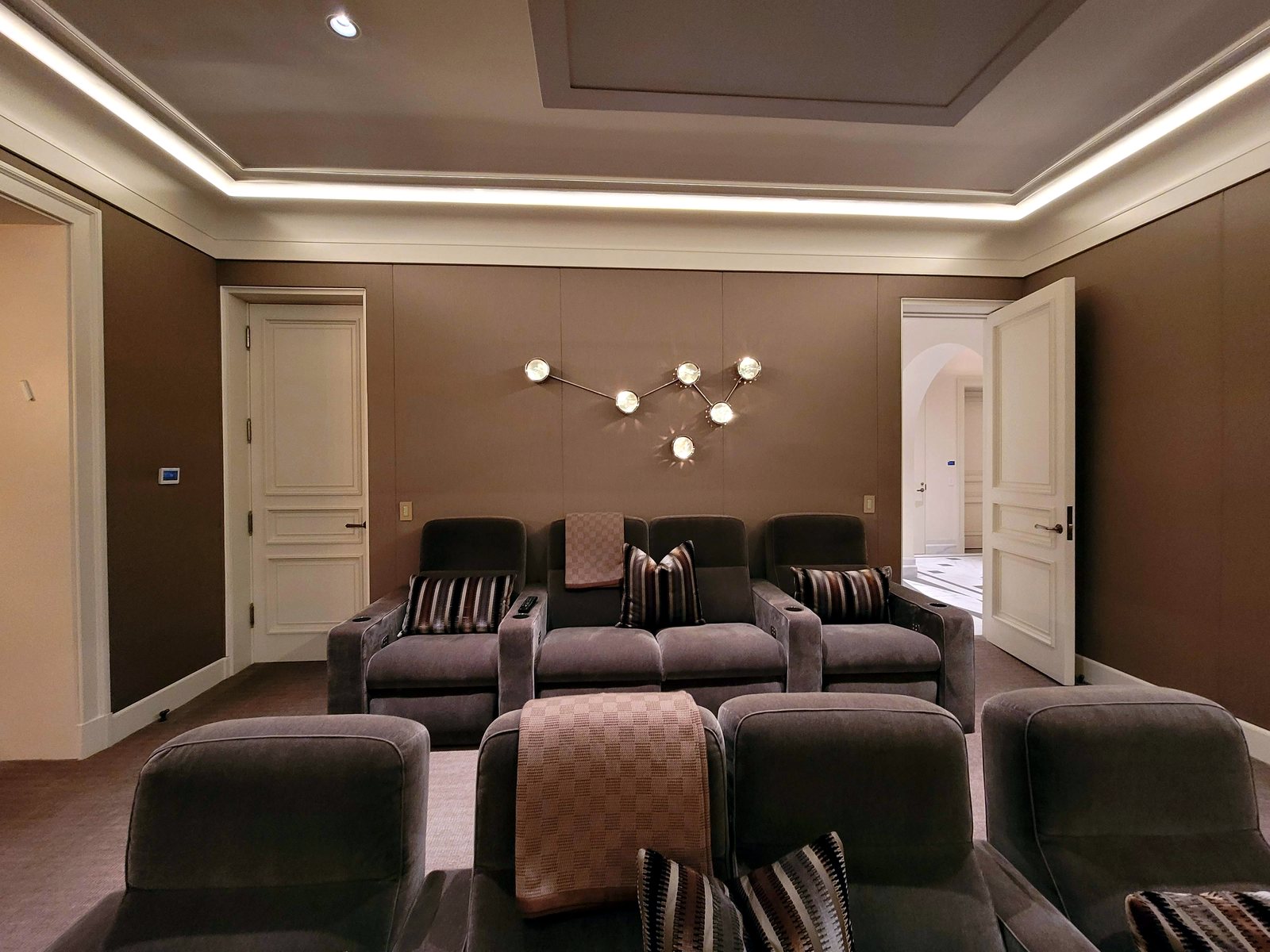
Choose the room around real use
A dedicated theater prioritizes immersion and control.
A dedicated theater can control light, seating orientation, screen placement, speaker positions, acoustics, noise isolation, equipment location, and visual distractions. That freedom supports larger projection images, acoustically transparent screens, multiple subwoofers, immersive audio, dark finishes, and calibrated playback.
The tradeoff is specialization. The room may be less suitable for casual conversation, daytime television, children's activities, or an open connection to the rest of the home.
A media room supports more than one activity.
A media room may combine movies, sports, gaming, streaming, music, conversation, and everyday family use. It often uses a bright direct-view display, architectural speakers, a concealed equipment rack, simplified control, flexible seating, and lighting that supports both viewing and normal room activity.
Openings, windows, fireplaces, built-ins, traffic paths, and furniture create more design constraints. The system must work with the room rather than forcing the room to behave like a black-box cinema.
Display choice follows light, size, and viewing distance.
Projection supports very large images, but it benefits from controlled light, a suitable throw path, screen planning, and careful brightness calculations. Direct-view televisions can provide strong brightness and contrast with simple startup and fewer environmental constraints. The correct choice depends on image size, seating, daylight, architecture, content, and budget.
Both rooms benefit from deliberate audio design.
Speaker placement, subwoofer locations, seating, room dimensions, openings, and acoustic surfaces all affect performance. A theater may conceal speakers behind an acoustically transparent screen and use extensive acoustic treatment. A media room may use in-wall, in-ceiling, on-wall, or freestanding speakers selected around aesthetics and furniture.
Multiple subwoofers can improve seat-to-seat consistency when the room and budget support them. Calibration should balance level, delay, crossover, equalization, and bass management across the real seating positions.
Lighting and control should match the room's purpose.
A theater can use entry, preview, movie, pause, cleanup, and exit scenes. A media room may need everyday, entertaining, sports, gaming, and evening scenes. The interface should coordinate the display, sources, audio, lighting, shades, and room functions without exposing unnecessary complexity.
The best answer may be a hybrid.
Many Houston homes benefit from a refined media room that delivers strong picture and sound without sacrificing daily use. Others have the space and priorities for a dedicated theater. The correct decision comes from the household, architecture, content, performance goals, and long-term use—not from a generic equipment package.
Common questions
Planning answers before the project begins.
Is a projector always better for a home theater?
No. Projectors can create a very large image, while modern direct-view displays can provide strong brightness and contrast with simpler operation. Room light, screen size, viewing distance, aesthetics, and budget determine the better fit.
Can a media room still have surround sound?
Yes. A media room can use in-wall, in-ceiling, on-wall, or freestanding speakers, subwoofers, acoustic treatment, and calibrated surround sound. The layout must work with the room's furniture, openings, windows, and daily use.
Which room is better for sports and gaming?
A media room is often better when the space needs to support casual viewing, sports, gaming, conversation, and everyday use. A dedicated theater is stronger when immersion and controlled light are the priority.
Continue planning
Related AV guides
Greater Houston AV design and service