Whole-home audio: a practical guide.
2026-06-20 · Obsidian Audio Video · Houston
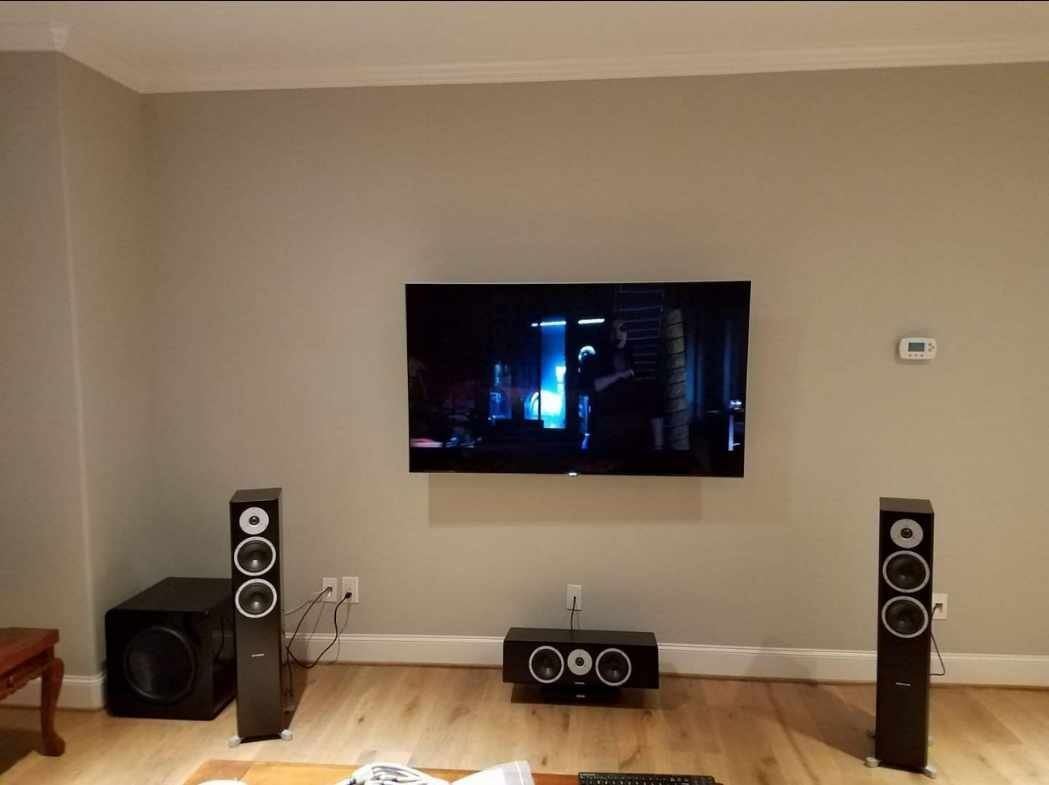
Whole-home audio — also called distributed audio or multi-room audio — is one of the most popular AV upgrades in Houston homes. It is also one of the most commonly underwhelming, because the difference between a system that sounds like background noise and one that sounds like music is almost entirely in the design, not the equipment.
How distributed audio works
A whole-home audio system sends music from one or more sources — streaming services, local files, vinyl — to speakers in multiple rooms. Each room (or zone) has independent volume and source control. The signal flows from the source through a central amplifier or matrix switcher to in-ceiling, in-wall or architectural speakers in each zone. The control system (Crestron, Control4, Savant, or a standalone app) handles zone selection, source routing and volume.
The complexity is not in the concept. It is in the execution: speaker selection for each room, placement for the seating positions, amplifier sizing for the total system, network capacity for simultaneous streaming and programming the control interface so it is actually easy to use.
Speaker selection matters more than brand
The most common mistake in distributed audio is choosing speakers by brand and budget rather than by room. A 6.5-inch in-ceiling speaker that sounds fine in a bathroom will sound thin and lifeless in a 20-foot great room with stone floors. An 8-inch coaxial speaker with a pivoting tweeter will fill the same room with warmth and detail — but only if it is positioned correctly relative to the listening area.
Key considerations for speaker selection:
- Room size and ceiling height: Larger rooms need larger drivers or more speakers. High ceilings need higher-SPL speakers or directional tweeters.
- Room materials: Hard surfaces (tile, stone, glass) reflect sound and create harshness. Soft surfaces (rugs, curtains, furniture) absorb it. Speaker choice and placement should account for the room's acoustics.
- Use case: Background music for dinner needs different performance than critical listening in a dedicated music room.
- Outdoor zones: Houston heat and humidity require weatherproof speakers designed for sustained outdoor use — not indoor speakers that happen to be near a covered patio.
Placement is the difference between music and noise
A well-placed speaker disappears into the room. A poorly-placed speaker calls attention to itself. The goal is even coverage across the listening area — not a hot spot directly under the speaker and silence everywhere else.
In-ceiling speakers should be positioned relative to where people sit, not relative to where the joists happen to run. In a kitchen, that means speakers near the island and the sink, not in the middle of the room where no one stands. In a great room, it means speakers flanking the sofa and the dining table. Outdoors, landscape speakers should be distributed along the perimeter so the yard is covered evenly — not clustered in one corner.
Zones and source control
Every zone needs independent volume control. Most modern systems also support independent source selection — so someone can listen to jazz in the kitchen while someone else listens to a podcast in the office. The number of simultaneous independent sources determines the amplifier and matrix requirements, so it's worth thinking through before installation.
Streaming is the dominant source in most Houston homes. Systems like Bluesound, Sonos, or native Crestron/Control4/Savant streaming integrate with Spotify, Apple Music, Tidal, Amazon Music and local network storage. The network infrastructure needs to handle multiple simultaneous streams without dropouts — which brings us back to the network foundation.
Two-channel vs. distributed audio
A two-channel system in a dedicated listening room is a different animal from distributed audio throughout the house. Two-channel is about presence, imaging and the performance feeling like it's in the room. Distributed audio is about music being there when you want it, at the right volume, in every room — without thinking about it. Both are valid. Both require different design decisions. A great distributed system does not sound like a two-channel system, and it shouldn't be judged by that standard.
The best whole-home audio systems combine both: a properly-designed distributed system for everyday listening, and a dedicated two-channel system (or home theater) for when you want to sit down and really listen.
Need help with your AV system in Houston? Start a conversation or call 346-357-5323.